 AnalyticsCLI.com
 Blank AI Prompts Are Bad Marketing
Why product behavior, revenue signals, feedback, and reviews make AI marketing advice sharper.
AnalyticsCLI Team
May 3, 2026
AI is useful for marketing only when it has something real to work from.
If you ask an agent to “write better landing page copy” without product evidence, you usually get fluent averages. If you show it which users retain, which features correlate with conversion, what reviews mention, and where trials churn, the advice gets sharper.
That is one of the underrated uses of AnalyticsCLI and the AI Growth Engineer: not just code tasks, but marketing advice grounded in production signals.
Product Data Is Marketing Research
Founders often separate product analytics and marketing too much.
But product behavior can answer marketing questions:
- Which feature do retained users reach first?
- Which onboarding answers predict purchase intent?
- Which segment converts but churns quickly?
- Which words appear in positive reviews?
- Which promise causes support complaints?
- Which paywall path creates strong trial starts but weak retention?
Those are marketing inputs.
They can shape positioning, ads, landing pages, onboarding copy, pricing pages, lifecycle emails, and product-led content.
The Bad Way To Use AI For Marketing
The bad workflow is:
Write five landing page headlines for my app.
The agent can produce decent words, but it has no product truth. It does not know who retains, what users complain about, which feature matters, or what the business should avoid promising.
That output often sounds polished and empty.
The Better Workflow
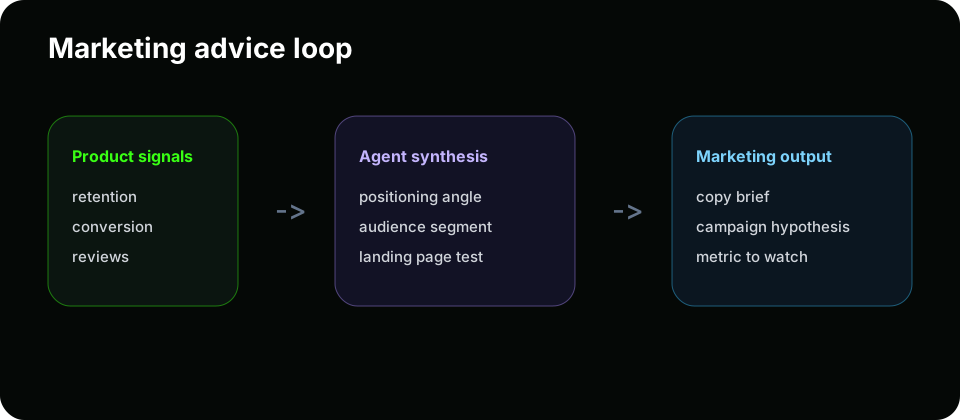
The better workflow feeds the agent production context first.
For example:
- retained users complete a specific setup action
- trial users who skip onboarding churn more often
- reviews mention “finally understand my numbers”
- Sentry shows no reliability issue in the activation flow
- feedback says the dashboard is powerful but intimidating
Now the marketing prompt changes:
Based on these signals, draft three landing page angles for founders who want AI coding agents to optimize their product from real data. Include the evidence behind each angle and one metric we should watch.
That is a much stronger assignment.
Example: Turning Retention Into Positioning
Imagine AnalyticsCLI data shows that teams who connect GitHub plus analytics retain better than teams who only view dashboard charts.
That could become a positioning insight:
The value is not just analytics. The value is giving your coding agent enough production context to create better product work.
That insight can become:
- a homepage section
- a comparison page
- onboarding copy
- a campaign for Codex or OpenClaw users
- a blog post about production context for coding agents
- a sales email to SaaS founders
The key is that the marketing idea came from observed behavior, not a brainstorming session.
Example: Reviews As Copy Research
App Store reviews and feedback often contain phrasing your team would not invent.
If users repeatedly mention “setup took too long,” that is a product issue. If happy users say “I finally saw where revenue leaked,” that is marketing language.
The AI Growth Engineer can help summarize those themes alongside analytics:
- what users say
- what they actually do
- what they pay for
- where they fail
- which claim is safe to make
That creates copy that feels more grounded.
Guardrails For Marketing Automation
Do not let an agent publish marketing claims without review.
Check:
- Is the claim supported by the data?
- Does it overpromise automation?
- Does it imply guaranteed growth?
- Does it conflict with privacy or compliance language?
- Does it fit the product roadmap?
- Can the team verify the campaign with a metric?
Good AI-assisted marketing should sound specific because it is specific.
What AnalyticsCLI Makes Possible
AnalyticsCLI is useful here because it can connect the product signal layer with the agent workflow.
The same production context that helps create GitHub issues can also create:
- positioning hypotheses
- campaign briefs
- landing page test ideas
- lifecycle email angles
- content outlines
- App Store listing improvements
That matters if you already pay for Codex, OpenClaw, Claude Code, or another AI tool. The subscription becomes more valuable when the agent can see the product logic behind the marketing.
A Simple Weekly Marketing Ritual
Once a week, ask:
- Which user segment retained best?
- Which action predicted success?
- Which feedback theme repeated?
- Which review phrase is worth reusing?
- Which product claim should we test?
- Which metric proves or rejects the test?
Then turn one answer into one marketing experiment.
For broader product optimization, start with the AI Growth Engineer, the integrations, or the SaaS and mobile use cases.
FAQ
Can the AI Growth Engineer give marketing advice?
Yes. Marketing advice is useful when it is grounded in product behavior, revenue, feedback, and review signals.
Should AI publish campaigns automatically?
No. Use AI to draft briefs, hypotheses, and copy options. Humans should review claims before publishing.
What is the best first marketing signal?
Start with retained users. What they did, what they valued, and how they described it usually produces better positioning than generic competitor research.